A 2009 treaty lets Nepali-made goods enter India without customs duty. The next opportunity may lie in the less crowded western corridor of Nepalgunj and Bardiya
Every carton of Réal juice that leaves Dabur’s plant near Birgunj and crosses into Raxaul pays no basic customs duty. There is nothing clever or grey about it. It is the plain effect of the India–Nepal Treaty of Trade of 2009, under which goods manufactured in Nepal enter India free of customs duty and quantity limits, while Indian goods going the other way still pay Nepali duty.
Twenty-five years later, surprisingly few Indian manufacturers have followed that template. As tariffs, supply-chain resilience and cost pressures move up boardroom agendas, the Nepal route deserves a fresh look. It needs to be understood properly, though, because it is widely misread.
What the treaty actually offers
The preference is conditional. A product qualifies only if Nepali processing changes its tariff classification at the four-digit HS level and adds at least 30% of its ex-factory value locally. Four items (vegetable fats, acrylic yarn, copper products and zinc oxide) are capped by annual quotas. Alcohol, tobacco and foreign-branded cosmetics are excluded altogether.
Three more points are often missed. The waiver covers basic customs duty only, and IGST still applies at the border, although a registered buyer can usually claim it back. India’s rules of origin (CAROTAR), tightened in March 2025, put the burden of proof squarely on the Indian importer, who may be asked for the Nepali supplier’s cost data. And India has tightened the treaty before: the four quotas were introduced in 2002 after a looser regime produced import surges in exactly those products.
Where the money really is
The biggest misconception is that shifting production to Nepal saves customs duty in itself. It does not. A company making soap or biscuits in Uttar Pradesh pays no customs duty on its own output anyway. The gains come from four more specific sources.
First, imported inputs. If a key raw material comes from outside South Asia and carries a high Indian duty, converting it in Nepal into a genuinely different product takes that duty out of the cost. On reasonable assumptions, this can be worth 5–6% of ex-factory value, which is significant in an industry with margins in the low teens.
Second, tax. Nepal taxes manufacturing (“special”) industries at 20%, against India’s effective 25.17%. Plants in designated underdeveloped districts get concessions of up to 90% for ten years, and special economic zones offer five-year tax holidays.
Third, geography and costs. Birgunj, Bhairahawa, Nepalgunj and Biratnagar are next to Bihar, eastern and central UP and north Bengal, among India’s fastest-growing consumer markets. The Nepali rupee is pegged at 1.6 to the Indian rupee, so there is almost no currency risk. Nepal’s minimum wage is NPR 19,550 (about ₹12,200) a month. Nepal also now has surplus hydropower: it exported 3.88 billion units of electricity to India and Bangladesh in FY26 and earned NPR 29.32 billion from it.
Fourth, a second market. A Nepali plant serves 30 million Nepali consumers without facing Nepal’s import duties. That is why Britannia built a NPR 1.11 billion biscuit plant at Simara, why Unilever Nepal earned NPR 1.96 billion in net profit in FY 2024/25, and why Bikaji broke ground on a ₹50-crore snacks unit with the Chaudhary Group in October 2025. A factory that can sell in either country is much less exposed to a policy change in one of them.
The overlooked corridor: Nepalgunj and Bardiya
Most Indian investment in Nepal has gone to the central Terai around Birgunj and Simara, or to the Bhairahawa–Butwal belt. The western gateway of Nepalgunj, opposite Rupaidiha in Uttar Pradesh’s Bahraich district, has drawn far less attention, even though its infrastructure has improved sharply. An integrated check post at Nepalgunj, built with Indian assistance and inaugurated by the two prime ministers in June 2023, has been operating since May 2024. It brings customs, immigration, quarantine, food-testing and banking under one roof.
Trade through the crossing is still very one-sided. In the first five months of FY 2025/26, Nepalgunj customs recorded imports of about NPR 30 billion but exports of only about NPR 1 billion. For an exporter, that means a modern crossing with spare capacity, and return loads to India that should come cheaper than on busier routes.
The bigger draw is next door. Bardiya, the district immediately west of Banke, is listed in Schedule 10 of Nepal’s Industrial Enterprises Act, 2020 among the areas that qualify for location-based tax concessions. A manufacturing (“special”) industry there gets a 70% concession on the 20% tax rate for ten years from the start of commercial production, an effective income-tax rate of about 6%, compared with 25.17% in India. Banke itself is not on the list, so the practical model is a factory in Bardiya that ships through the Nepalgunj check post. Kailali, Kanchanpur, Dang and Surkhet are in the same category, which gives western Nepal a wider cluster of eligible sites.
The market logic is equally strong. The corridor opens onto Bahraich and the neighbouring districts of UP’s Awadh region, with Lucknow within reach: a large, densely populated and under-served consumer belt. Bardiya and Banke also have a farm economy suited to food, agro and herbal processing, and Nepalgunj has regular flights to Kathmandu. For a first-time investor, this corridor offers a tax position and a less crowded border that the central Terai no longer does.
A playbook for India Inc
For Indian manufacturers, the lessons can be summed up in five rules.
Choose products where the transformation is real. Herbal and agro-processing using Himalayan inputs, energy-intensive processes that benefit from hydropower, and brands that sell on both sides of the border are the best fits. Refining, blending and repacking are the worst: recent duty-free shipments of refined edible oil drew complaints from Indian refiners and tighter origin checks within months.
Appraise the project with the tariff benefit set to zero. If the Nepal plant earns its cost of capital from Nepali sales, tax concessions and lower costs alone, the duty waiver is upside. If it does not, it is a bet on policy staying the same.
Get the paperwork right from the start. Keep audit-ready costing records, make sure transfer prices between parent and subsidiary are consistent with the 30% value-addition calculation, and ensure the Nepali company is genuinely managed in Nepal.
Pick the location for the concessions, not just the highway. A site in a Schedule 10 district such as Bardiya, or in a special economic zone, can change the tax bill for a decade. Check eligibility before buying land.
Keep backup capacity in India. The September 2025 unrest across Nepal briefly shut Britannia’s plant and disrupted Dabur’s, and the 2015 border blockade is still remembered in Birgunj. Buffer stocks and standby capacity are part of the cost of doing business there.
The window is open
Nepal is more investor-ready today than it has been in years. The Rastriya Swatantra Party won 182 of 275 seats in March, a rare single-party majority, and Balen Shah became Prime Minister. The minimum foreign investment threshold has been cut to NPR 20 million. With remittances above a third of GDP and Gulf-based workers returning home, Kathmandu needs factory jobs. India already accounts for 32.8% of Nepal’s FDI stock, and 39% of that is in manufacturing.
The treaty is a development preference that India has renewed repeatedly because a stronger Nepali industrial base is in India’s own interest. Companies that use it for genuine manufacturing, as Dabur has, will find a durable advantage. Those looking for a shortcut will find that the rules tighten quickly. And for companies willing to look beyond Birgunj, the Nepalgunj–Bardiya corridor may be the best place to start.
THE NEPAL ROUTE IN NUMBERS
0%
Indian basic customs duty on qualifying Nepali-made goods
30%
Minimum local value addition, plus a change in HS heading
सम्पत्ति शुद्धीकरण निवारण निर्देशन, २०८२ ले सुन–चाँदी व्यवसायीलाई के भन्छ?
एक जना ग्राहक पसलमा आउनुहुन्छ, पन्ध्र लाख रुपैयाँ बराबरको गहना छान्नुहुन्छ र झोलाबाट नगद निकाल्न थाल्नुहुन्छ। धेरै पसलका लागि यो खुसीको क्षण हो। तर आजको कानुनी अवस्थामा यही क्षण सबैभन्दा जोखिमपूर्ण पनि हुन सक्छ, किनभने त्यो भुक्तानी कसरी लिइयो, ग्राहक को हुनुहुन्थ्यो र त्यसको अभिलेख कहाँ राखियो भन्ने प्रश्नको जवाफ पछि तपाईंले नै दिनुपर्ने हुन्छ।
आन्तरिक राजस्व विभागले बहुमूल्य धातु वा वस्तुको कारोबार गर्ने व्यवसायीका लागि जारी गरेको सम्पत्ति शुद्धीकरण तथा आतङ्ककारी कार्यमा वित्तीय लगानी निवारण सम्बन्धी निर्देशन, २०८२ ले यही विषयलाई व्यवस्थित बनाएको छ। निर्देशन २०८२ असार ३० मा जारी भएको थियो र २०८२ कात्तिक २१ मा यसको पहिलो संशोधन भइसकेको छ। यसअघिको २०७७ सालको निर्देशन खारेज भइसकेकाले अब पालना गर्नुपर्ने आधार यही हो।
पहिलो कुरा: तपाईं यसको दायरामा पर्नुहुन्छ कि पर्नुहुन्न?
धेरैको बुझाइ यस्तो छ कि यो कानुन बैंक र वित्तीय संस्थाका लागि मात्र हो। वास्तविकता फरक छ। निर्देशनले बहुमूल्य धातु वा वस्तुको कारोबार गर्ने आयातकर्ता, वितरक, थोक बिक्रेता र खुद्रा बिक्रेता सबैलाई “सूचक संस्था” भनेको छ। पसलको आकार सानो होस् वा ठूलो, दायित्व उस्तै हो।
बहुमूल्य धातु वा वस्तुको परिभाषा पनि फराकिलो छ। यसभित्र सुन, चाँदी, प्लाटिनम, इरिडियम, ओस्मियम, पालाडियम, रोडियम र रुथेनियम पर्छन्। त्यसैगरी डायमण्ड, स्याफायर, रुबी, इमेराल्ड, जेड, पर्ल, कोरन्डम र एकुमेरिन तथा तीबाट बनेका गहना पनि यसैभित्र पर्छन्। माथिका धातु दुई प्रतिशत वा सोभन्दा बढी मिसिएका अन्य धातु वा वस्तु समेत दायरामा आउँछन्।
पसलभित्रको तयारी: कागजमा मात्र होइन, व्यवहारमा
निर्देशनले पहिलो अपेक्षा गरेको कुरा हो, पसलको आफ्नै लिखित नीति तथा कार्यविधि। त्यसमा कर्मचारीको जिम्मेवारी र कार्यविभाजन, जोखिम व्यवस्थापनको आधार, ग्राहक तथा कारोबारको पहिचान र अद्यावधिक गर्ने प्रणाली, अनि अस्वाभाविक तथा शंकास्पद कारोबार चिन्ने आधार स्पष्ट लेखिएको हुनुपर्छ।
दोस्रो, जोखिम मूल्याङ्कन। ग्राहक र कारोबारलाई उच्च, मध्यम र न्यून जोखिममा वर्गीकरण गरी त्यसको लिखित अभिलेख अद्यावधिक राख्नुपर्छ। विभागले माग गरेका बखत यो तुरुन्तै उपलब्ध गराउनुपर्ने हुन्छ। जोखिम मूल्याङ्कन प्रतिवेदनको स्वतन्त्र समीक्षा पनि गराउनुपर्ने व्यवस्था छ।
तेस्रो, कार्यान्वयन अधिकारी। व्यवस्थापन तहको कुनै कर्मचारी वा पदाधिकारीलाई कार्यान्वयन अधिकारी तोकी निजको नाम, ठेगाना र सम्पर्क विवरण विभाग तथा वित्तीय जानकारी इकाईलाई तत्काल दिनुपर्छ। पछि त्यो व्यक्ति वा विवरण फेरिएमा सोको जानकारी पनि तुरुन्तै पठाउनुपर्छ। यसबाहेक लगानीकर्ता, व्यवस्थापन र कर्मचारीलाई अभिमुखीकरण वा तालिम दिने व्यवस्था मिलाउनु पनि पसलकै दायित्व हो।
ग्राहक चिन्नु भनेको नाम टिप्नु मात्र होइन
ग्राहक पहिचान गर्दा नागरिकताको प्रमाणपत्र वा राष्ट्रिय परिचयपत्रको विद्युतीय अभिलेख प्रयोग गर्न सकिन्छ, र नागरिक एप मार्फत पहुँच लिएर पनि पहिचान गर्न मिल्छ। पहिचानको सम्पुष्टि राष्ट्रिय परिचयपत्रमा उल्लेख भएको मोबाइल नम्बर, विद्युतीय ल्याप्चे वा हस्ताक्षरबाट गर्न सकिन्छ। प्राविधिक कारणले यो सम्भव नभएमा ऐन र नियमावली अनुसार हुने गरी आन्तरिक व्यवस्था मिलाउनुपर्छ।
बेनामी वा काल्पनिक नाममा कुनै पनि कारोबार गर्न वा गराउन पूर्ण रूपमा निषेध छ। ग्राहक उच्च जोखिमयुक्त देखिएमा, उच्च पदस्थ व्यक्ति वा निजको परिवारका सदस्य तथा सम्बद्ध व्यक्ति भएमा, अथवा कारोबार जटिल, ठूलो वा असामान्य प्रवृत्तिको देखिएमा वृहत् ग्राहक पहिचान गर्नुपर्छ र वास्तविक धनी को हो भन्ने सम्पुष्टि गर्नुपर्छ। कसैले अर्काको तर्फबाट कारोबार गरिरहेको छ कि छैन भन्ने पनि यकिन गर्नुपर्ने हुन्छ।
पहिचान एक पटक गरेर पुग्दैन। उच्च जोखिम देखिएका ग्राहकको विवरण कम्तीमा छ महिनामा एक पटक अद्यावधिक गर्नुपर्छ। ग्राहकको कारोबार निजको पहिचान विवरणसँग मेल नखाएमा वा दिइएको सूचनाको सत्यतामा शंका लागेमा तत्कालै अद्यावधिक गर्नुपर्ने व्यवस्था छ।
पैसा कसरी लिने: यहीँ धेरै पसल चुक्छन्
निर्देशनको सबैभन्दा प्रत्यक्ष असर पर्ने व्यवस्था यही हो। पसलले आफ्नो कारोबार व्यवसायिक संस्थाको नाममा रहेको बैंक खाताबाट मात्र गर्नुपर्छ। साहुजीको व्यक्तिगत खाता, कर्मचारीको खाता वा परिवारका सदस्यको खाता प्रयोग गर्न पाइँदैन। यो व्यवस्था करका दृष्टिले मात्र होइन, सम्पत्ति शुद्धीकरण निवारणका दृष्टिले पनि उत्तिकै महत्त्वपूर्ण छ।
त्यसैगरी एक पटकमा रु. दश लाख वा सोभन्दा बढीको बहुमूल्य धातु वा वस्तु बिक्री गर्दा रकम ग्राहक वा निजको परिवारको बैंक खाताबाटै भुक्तानी लिनुपर्छ। खरिद र बिक्री दुवैमा विद्युतीय माध्यमलाई प्राथमिकता दिनुपर्ने पनि निर्देशनले भनेको छ। विद्युतीय भुक्तानीमा सीमाका कारण अप्ठ्यारो परेमा सीमा थप गर्न विभागले नेपाल राष्ट्र बैंकलाई अनुरोध गर्ने व्यवस्था समेत रहेको छ।
कहिले र कहाँ प्रतिवेदन पठाउने?
कुनै ग्राहकले एकै पटक वा पटक पटक गरी एक दिनमा रु. दश लाख वा सोभन्दा बढीको कारोबार गरेमा त्यसलाई सीमा कारोबार भनिन्छ। यस्तो कारोबारको विवरण कारोबार भएको मितिले पन्ध्र दिनभित्र वित्तीय जानकारी इकाईको goAML प्रणाली मार्फत पठाउनुपर्छ। बैंक तथा वित्तीय संस्थाबाट गरेको खरिदमा भने यो विवरण पेस गर्नु पर्दैन।
शंकास्पद कारोबारको हकमा नियम फरक छ। यहाँ रकमको कुनै सीमा हुँदैन, र कारोबार सम्पन्न नभई प्रयास मात्र भएको अवस्था पनि दायरामा पर्छ। यस्तो देखिएमा तत्काल goAML मार्फत प्रतिवेदन पेस गर्नुपर्छ। महत्त्वपूर्ण कुरा के भने, यस्तो प्रतिवेदन पेस गरेको कुरा ग्राहक वा अन्य कसैलाई जानकारी गराउन पाइँदैन; गोपनीयता भङ्ग गरेमा ऐन बमोजिम सजाय हुन्छ।
यसबाहेक अर्धवार्षिक तथा वार्षिक प्रतिवेदन निर्धारित ढाँचामा अवधि समाप्त भएको एक महिनाभित्र विभागमा पठाउनुपर्छ। सूचीकृत परिपालना परीक्षकबाट आर्थिक वर्ष समाप्त भएको छ महिनाभित्र परिपालना परीक्षण गराई प्रतिवेदन पेस गर्नुपर्ने व्यवस्था पनि छ। सम्पूर्ण विवरण, अभिलेख र प्रतिवेदन कारोबार वा व्यावसायिक सम्बन्ध अन्त्य भएको मितिले पाँच वर्षसम्म, विद्युतीय माध्यममा समेत, सुरक्षित राख्नुपर्छ।
पालना नगरे के हुन्छ?
निर्देशनले कारबाहीको स्पष्ट सिँढी तय गरेको छ। नीति तथा कार्यविधि नबनाएमा पहिलो पटक लिखित रूपमा सचेत गराइन्छ, दोस्रो पटक रु. एक लाख जरिवाना हुन्छ र तेस्रो पटक गम्भीरताका आधारमा रु. दश लाखदेखि एक करोडसम्म जरिवाना हुन सक्छ। त्यसपछि पनि सुधार नभए जरिवानासहित दर्ता खारेजीसम्मको कारबाही हुन्छ।
ग्राहक पहिचान सम्बन्धी व्यवस्था लागू नभएमा, उच्च पदस्थ व्यक्ति पहिचान गर्ने प्रणाली नभएमा वा वास्तविक धनी पहिचानको व्यवस्था नभएमा पनि यस्तै क्रमिक कारबाही हुन्छ, जसमा तेस्रो पटकदेखि रु. पचास लाखसम्म जरिवाना लाग्न सक्छ। बेनामी वा काल्पनिक नाममा कारोबार गरेको पाइएमा गम्भीरताका आधारमा रु. एक लाखदेखि एक करोडसम्म जरिवाना हुन्छ। सीमा वा शंकास्पद कारोबारको प्रतिवेदन समयमा नपठाएमा वित्तीय जानकारी इकाईले रु. एक करोडसम्म जरिवाना गर्न सक्छ।
अन्त्यमा
यी व्यवस्थाहरू हेर्दा बोझिलो लाग्न सक्छन्, तर व्यवहारमा गर्नुपर्ने काम सीमित छन्। एउटा लिखित नीति र कार्यविधि, एक जना तोकिएको कार्यान्वयन अधिकारी, ग्राहकको परिचय खुल्ने दुरुस्त अभिलेख, फर्मकै बैंक खाताबाट हुने भुक्तानी, र समयमै पठाइने प्रतिवेदन। यत्ति भयो भने निर्देशनको ठूलो हिस्सा स्वतः पालना हुन्छ।
सुरुमा उल्लेख गरिएको पन्ध्र लाखको नगद भुक्तानीको प्रसङ्गमा फर्कौं। त्यो रकम ग्राहककै बैंक खाताबाट लिइयो, ग्राहकको परिचय खुल्यो र सीमा कारोबारको विवरण समयमै पठाइयो भने त्यो बिक्री पसलका लागि सुखद नै रहन्छ। नत्र त्यही एउटा कारोबारले वर्षौंको मिहिनेतमाथि प्रश्न खडा गर्न सक्छ। कानुन पालना गर्नु भनेको झन्झट मोल्नु होइन, व्यवसायलाई सुरक्षित बनाउनु हो।
(यो लेख सामान्य जानकारीका लागि मात्र तयार पारिएको हो। कुनै निर्णय लिनुअघि निर्देशन, ऐन तथा नियमावलीको मूल पाठ हेरी परामर्श लिनुहोस्।)
– सम्पत्ति शुद्धीकरण निर्देशन २०८२, सूचक संस्था, बहुमूल्य धातु कारोबार, सुन चाँदी व्यवसायी कानुन, ग्राहक पहिचान KYC, शंकास्पद कारोबार प्रतिवेदन
For decades, the relationship between a business owner and their Chartered Accountant (CA) was purely transactional. The business owner handed over a box of receipts at the end of the financial year, and the accountant processed the numbers, calculated the liability, and filed the tax returns. This traditional, retrospective approach treated financial management as a historical record rather than a forward-looking strategy.
In today’s volatile economic landscape, relying on financial advice that only looks backward is like driving a car while looking exclusively in the rearview mirror.
Modern businesses face complex regulatory changes, hyper-competition, and unpredictable market shifts. To survive and scale, you need more than a bookkeeper or a tax preparer. You need high-level corporate financial advisory.
Understanding the full benefits of hiring a CA firm is the ultimate growth hack for modern businesses. It can shift your company from a state of survival to sustainable, long-term expansion.
Shifting from Reactive Compliance to Proactive Financial Strategy
The most significant value a modern financial partner brings is the shift from reactive tracking to proactive planning. Traditional accounting is diagnostic; it tells you what happened and why. Strategic financial management is prescriptive; it tells you what to do next to optimize performance.
Cash Flow Forecasting vs. Cash Flow Management
Many profitable businesses fail not because they lack revenue, but because they run out of cash. Managing cash flow is about tracking what comes in and goes out today. Forecasting, however, models your future cash positions based on sales pipelines, supply chain timelines, and seasonal dips.
A progressive CA firm uses advanced data analytics to predict cash crunches months in advance. This foresight gives you the runway to secure working capital, renegotiate vendor terms, or pause non-essential capital expenditures before a crisis hits.
Strategic Tax Optimization
Tax planning is not a conversation to have in the final month of the financial year. True tax optimization requires an ongoing, year-round strategy. A sophisticated accounting firm closely monitors evolving tax codes, incentives, and government subsidies.
By aligning your business milestones—such as purchasing equipment, hiring talent, or expanding into new territories—with available tax credits, they help you legally minimize your liability. This keeps more capital inside your business to fund future growth.
The Rise of the Virtual CFO: High-Level Expertise on a Growth Budget
As a business transitions from a startup to a mid-sized enterprise, its financial complexity scales exponentially. You suddenly need advanced financial modeling, cap table management, investor reporting, and rigorous budgeting. However, hiring a full-time, seasoned Chief Financial Officer (CFO) can cost hundreds of thousands of dollars annually—an expense that many growing companies cannot justify.
This resource gap is where top-tier accounting firms provide massive utility by stepping in with virtual CFO services for SMEs.
Data-Driven Decision Making
A virtual CFO strips away the noise from your financial data and delivers clear, actionable insights through customized executive dashboards. Instead of reviewing clunky balance sheets, you get a real-time view of your core Key Performance Indicators (KPIs), such as:
Customer Acquisition Cost (CAC) vs. Lifetime Value (LTV): Ensuring sustainable unit economics.
Gross Margins per Product Line: Identifying exact profit centers and loss-making offerings.
Inventory Turnover Ratios: Optimizing working capital and warehousing costs.
Break-even Points: Clear thresholds for establishing new operational branches.
Business Model Validation and Scenario Planning
What happens if your raw material costs increase by 12%? What if a major client delays payment by 60 days? What is the financial impact of acquiring a smaller competitor? A CA firm acting as your virtual CFO runs complex scenario analyses and stress-tests your business model. This ensures that when you make a major pivot or expansion move, you do so backed by hard numbers rather than gut feelings.
Mitigating Risk and Strengthening Internal Controls
Growth without control leads to operational chaos. As your transaction volumes increase and your team expands, the risk of financial leakage, internal fraud, human error, and compliance breaches grows exponentially.
Many business owners view an independent audit as a stressful, mandated hurdle. In contrast, a forward-thinking firm treats comprehensive accounting compliance services as a health check for your operational infrastructure.
Plugging Financial Leaks
CAs look deeply into your internal workflows to ensure appropriate segregation of duties and robust authorization loops. By identifying weak links in your procurement, payroll, and invoicing systems, they close vulnerabilities before they lead to significant losses or asset misappropriation.
Navigating Regulatory Minefields
Regulatory landscapes are constantly shifting. Non-compliance—whether in corporate law, labor regulations, cross-border trade, or data privacy financing—carries severe financial penalties and reputational damage. A dedicated financial partner acts as your compliance shield, ensuring that your corporate governance framework is airtight and fully aligned with current statutory demands.
Building Unshakeable Credibility with Investors and Lenders
To scale rapidly, most businesses eventually require external capital, whether through bank loans, venture capital, or private equity. When you pitch to lenders or investors, they do not just buy into your vision; they rigorously audit your financial integrity.
Securing Institutional Financing
Banks are risk-averse institutions. If your financial statements are messy, inconsistent, or lack professional certification, your loan application will likely be rejected or saddled with high interest rates. Presenting financial records prepared and verified by a reputable CA firm signals to lenders that your business is low-risk, organized, and transparent.
Winning the Venture Capital Due Diligence
Venture capitalists and private equity investors conduct deep financial due diligence before cutting a check. They look for clean revenue recognition, clear tax histories, and defensible financial projections. Having an established firm manage your books and defend your financial models during due diligence dramatically accelerates the deal-closing process and protects your company’s valuation.
Conclusion: Turn Your Financial Data into Your Competitive Advantage
Your business numbers tell a vivid story about where your company has been, where it stands today, and where it is headed tomorrow. If you only look at those numbers during tax season, you are missing out on valuable strategic insights.
Scaling a business requires a clear roadmap, balanced risk management, and optimized capital allocation. By upgrading your relationship with your Chartered Accountant from a backward-looking compliance vendor to a forward-looking strategic partner, you unlock the full power of your financial data. Stop viewing accounting as a cost center, start leveraging it as your ultimate engine for sustainable, long-term growth.
Four Labour Codes Herald Transformational Change: Better Wages, Safety, Social Security & Enhanced Welfare for India’s Workforce Codes lay the foundation for a protected, future-ready workforce and resilient industries, boosting employment and driving labour reforms for Aatmanirbhar Bharat Code aligns India’s labour ecosystem with global standards, ensuring social justice for all workers.
In a historic decision, the Government of India has announced that the four Labour Codes – the Code on Wages, 2019, the Industrial Relations Code, 2020, the Code on Social Security, 2020 and the Occupational Safety, Health and Working Conditions Code, 2020 are being made effective from 21st November 2025, rationalising 29 existing labour laws. By modernising labour regulations, enhancing workers’ welfare and aligning the labour ecosystem with the evolving world of work, this landmark move lays the foundation for a future-ready workforce and stronger, resilient industries driving labour reforms for Aatmanirbhar Bharat.
Many of India’s labour laws were framed in the pre-Independence and early post-Independence era (1930s–1950s), at a time when the economy and world of work were fundamentally different. While most major economies have updated and consolidated their labour regulations in recent decades, India continued to operate under fragmented, complex and in several parts outdated provisions spread across 29 Central labour laws. These restrictive frameworks struggled to keep pace with changing economic realities and evolving forms of employment, creating uncertainty and increasing compliance burden for both workers and industry. The implementation of the four Labour Codes addresses this long-pending need to move beyond colonial-era structures and align with modern global trends. Together, these Codes empower both workers and enterprises, building a workforce that is protected, productive and aligned with the evolving world of work — paving the way for a more resilient, competitive and self-reliant nation.
A comparison of the labour ecosystem, before and after the implementation of the Labour Codes, is as follows:
Pre Labour Reforms
Post Labour Reforms
Formalisation of Employment
No mandatory appointment letters
Mandatory appointment letters to all workers. Written proof will ensure transparency, job security, and fixed employment.
Social Security Coverage
Limited Social Security Coverage
Under Code on Social Security, 2020 all workers including gig & platform workers to get social security coverage. All workers will get PF, ESIC, insurance, and other social security benefits.
Preventive Healthcare
No legal requirement for employers to provide free annual health check-ups to workers
Employers must provide all workers above the age of 40 years with a free annual health check-up. Promote timely preventive healthcare culture
Timely Wages
No mandatory compliance for employers payment of wages
Mandatory for employers to provide timely wages, ensuring financial stability, reducing work stress and boosting overall morale of the workers.
Women workforce participation
Women’s employment in night shifts and certain occupations was restricted
Women are permitted to work at night and in all types of work across all establishments, subject to their consent and required safety measures. Women will get equal opportunities to earn higher incomes – in high paying job roles.
ESIC coverage
ESIC coverage was limited to notified areas and specific industries; establishments with fewer than 10 employees were generally excluded, and hazardous-process units did not have uniform mandatory ESIC coverage across India
ESIC coverage and benefits are extended Pan-India – voluntary for establishments with fewer than 10 employees, and mandatory for establishments with even one employee engaged in hazardous processes. Social protection coverage will be expanded to all workers.
Compliance Burden
Multiple registrations, licenses and returns across various labour laws.
Single registration, PAN-India single license and single return. Simplified processes and reduction in Compliance Burden.
Benefits of Labour Reforms Across Key Sectors:
1. Fixed-Term Employees (FTE):
FTEs to receive all benefits equal to permanent workers, including leave, medical, and social security.
Gratuity eligibility after just one year, instead of five.
Equal wages as permanent staff, increasing income and protection.
Promotes direct hiring and reduces excessive contractualisation.
2. Gig & Platform Workers:
‘Gig work’, ‘Platform work’, and ‘Aggregators’ have been defined for the first time.
Aggregators must contribute 1–2% of the annual turnover, capped at 5% of the amount paid/payable to gig and platform workers.
Aadhaar-linked Universal Account Number will make welfare benefits easy to access, fully portable, and available across states, regardless of migration.
3. Contract Workers:
Fixed-term employees (FTE) will increase employability and ensure social security, legal protection like benefits equal to permanent employees.
Fixed-term employees will become eligible for gratuity after one year of continuous service.
Principal employer will provide health benefits and social security benefits to contract workers.
Workers to get free annual health check-up.
4. Women Workers:
Gender discrimination legally prohibited.
Equal pay for equal work ensured.
Women are permitted to work night shifts and in all types of work (including underground mining and heavy machinery), subject to their consent and mandatory safety measures.
Mandatory women’s representation in grievance redressal committees
Provision to add parents-in-law in Family Definition of Female employees, expanding dependent coverage and ensuring inclusivity.
5. Youth Workers:
Minimum wage is guaranteed for all workers.
All workers to get appointment letters, – promoting social security, employment history and formal employment.
Worker exploitation by employers is prohibited—payment of wages during leave has been made mandatory.
To ensure a decent standard of living, workers will receive wages as per the floor wage determined by the Central Government.
6. MSME Workers:
All MSME workers covered under the Social Security Code, 2020, eligibility based on employee count.
Minimum wage guaranteed for all workers.
Workers will have access to facilities such as canteens, drinking water, and rest areas.
Provisions for standard working hours, double overtime wages, and paid leave.
Timely wage payment ensured.
7. Beedi & Cigar Workers:
Minimum wages guaranteed for all.
Working hours capped at 8 -12 hours per day, 48 hours per week has been capped.
Overtime Work beyond prescribed hours, to be consent based and pay at least double the normal wage rate.
Timely payment of wages ensured.
Workers eligible for Bonus after completing 30 days of work in a year.
8. Plantation Workers:
Plantation workers are now brought under the OSHWC Code and the Social Security Code.
Labour Codes apply to plantations with more than 10 workers or 5 or more hectares.
Mandatory safety training on handling, storing, and using chemicals.
Protective equipment mandatory to prevent accidents and chemical exposure.
Workers and their families to get full ESI medical facilities; Education facilities for their children are also guaranteed.
9. Audio-Visual & Digital Media Workers:
Digital and audio-visual workers, including journalists in electronic media, dubbing artists, and stunt persons will now receive full benefits.
Mandatory appointment letter for all workers – clearly stating their designation, wages, and social security entitlements.
Timely payment of wages ensured.
Overtime Work beyond prescribed hours, to be consent based and pay at least double the normal wage rate.
10. Mine Workers:
The Social Security Code treats certain commuting accidents as employment-related, subject to conditions of time, and place of employment.
Central Government notified standards to standardize workplace occupational safety and health conditions.
Health safety for all workers will be ensured. Free annual health check-up will be provided.
Limit on working hours set to 8 to 12 hours per day, 48 hours per week to ensure health and work-life balance.
11. Hazardous Industry Workers:
All workers will receive free annual health check-ups.
Central Government will frame national standards for better safety of workers.
Women can work in all establishments, including underground mining, heavy machinery, and hazardous jobs, ensuring equal job opportunities for all.
Mandatory safety committee at each site for on-site safety monitoring, and safe handling of hazardous chemicals ensured.
12. Textile Workers:
All Migrant Workers (direct, contractor-based and self-migrated) to get Equal wages, welfare benefits and PDS portability benefits.
Workers can raise claims for upto 3 years for settlement of pending dues, facilitating flexible and easy resolution.
Provision for double wages for workers for overtime work.
13. IT & ITES Workers:
Release of Salary mandatory by the 7th of every month. Transparency and trust ensured.
Equal pay for equal work made mandatory, women’s participation is strengthened.
Facility for women to work night shifts in all establishments – women to get opportunity to earn higher wages.
Timely resolution of harassment, discrimination, and wage related disputes.
Guarantee of social security benefits through fixed-term employment and mandatory appointment letters.
14. Dock Workers:
All Dock workers to get formal recognition, Legal Protection.
Mandatory appointment letters to guarantee social security benefits.
Provident fund, pension, and insurance benefits ensured for all, whether contract or temporary dock workers.
Employer-funded annual health check-ups mandatory.
Dock workers to get mandatory medical facilities, first aid, sanitary and washing areas, etc., to ensure decent work conditions and safety.
15. Export Sector Workers:
Export sector fixed term workers to receive gratuity, provident fund (PF), and other social security benefits.
Every worker to have the option of availing annual leaves after 180 days of work in a year.
Every worker to get right to timely wage payment and no unauthorized wage deductions and no wage ceiling restrictions.
Women allowed to work in night shifts with consent, ensuring opportunity to earn higher income.
Safety and welfare measures include mandatory written consent, double wages for overtime, safe transportation, CCTV surveillance, and security arrangements.
Beyond the major welfare initiatives already highlighted, the Labour Codes introduce several further reforms that strengthen worker protection and simplify compliance for employers:
National Floor Wage to ensure no worker receives a wage below the minimum living standard.
Gender-neutral pay and job opportunities, explicitly prohibiting discrimination—including against transgender persons.
Inspector-cum-Facilitator system, shifting enforcement towards guidance, awareness and compliance support rather than punitive action.
Faster and predictable dispute resolution, with two-member Industrial Tribunals and the option to approach tribunals directly after conciliation.
Single registration, single licence and single return across safety and working-conditions requirements, replacing multiple overlapping filings.
National OSH Board to set harmonised safety and health standards across sectors.
Mandatory safety committees in establishments with 500+ workers, improving workplace accountability.
Higher factory applicability limits, easing regulatory burden for small units while retaining full safeguards for workers.
In line with the wide-ranging consultations carried out during the drafting of the Labour Codes, the Government will likewise engage the public and stakeholders in the framing of the corresponding rules, regulations, schemes, etc. under the Codes. During transition, the relevant provisions of the existing labour Acts and their respective rules, regulations, notifications, standards, schemes, etc. will continue to remain in force.
Over the past decade, India has expanded social-security coverage dramatically, rising from about 19% of the workforce in 2015 to more than 64% in 2025, ensuring that protection and dignity reach workers across the country, and also earning recognition in the global arena for this milestone achievement in social protection. The implementation of the four Labour Codes marks the next major step in this trajectory, further widening the social-security net and embedding portability of benefits across states and sectors. With expanded social security, stronger protections and nationwide portability of entitlements, the Codes place workers, especially women, youth, unorganised, gig and migrant workers, firmly at the centre of labour governance. By reducing compliance burden and enabling flexible, modern work arrangements, the Codes boost employment, skilling and industry growth, reaffirming the Government’s commitment to a pro-worker, pro-women, pro-youth and pro-employment labour ecosystem.
Labour at the Core of India’s Growth
The empowerment of labour forms the cornerstone of an empowered, prosperous, and Aatmanirbhar India. Reflecting this vision, employment in India has shown remarkable growth- rising from 47.5 crore in 2017–18 to 64.33 crore in 2023–24, a net addition of 16.83 crore jobs in just six years. During the same period, the unemployment rate declined sharply from 6.0% to 3.2%, and 1.56 crore women entered the formal workforce, underscoring the Government’s emphasis on inclusive and sustained labour empowerment. The positive outlook of the labour market has also led to a broader socio-economic transformation, mirrored by declining proportion of people below the international poverty line. Additionally, India’s social protection system has expanded rapidly to become one of the largest globally.
Labour is a key driver of economic growth and development. In order to simplify and strengthen the framework governing workers’ rights, the Government consolidated 29 labour laws into four comprehensive Labour Codes- namely, the Code on Wages, 2019, the Industrial Relations Code, 2020, the Code on Social Security, 2020 and the Occupational Safety, Health and Working Conditions Code, 2020. This historic reform ensures that workers gain easier access to security, dignity, health, and welfare measures, reinforcing
Rationale Behind Codification of Existing 29 Labour Laws
Reforms in labour laws are an ongoing process. The Government continuously works to modernize and streamline the legislative framework in line with the evolving economic and industrial landscape of the country. The codification of 29 existing labour laws into four Labour Codes was undertaken to address long-standing challenges and make the system more efficient and contemporary. The codification aims to enhance ease of doing business, promote employment generation, ensure safety, health, social & wage security for every worker.
The key reasons behind this reform include:
Simplifying compliance: Multiplicity of laws leads to difficulty in compliance.
Streamlining enforcement: Multiplicity of authorities in different labour laws led to complexity and difficulty in enforcement.
Modernizing outdated laws: Most labour legislations were framed during the pre-Independence era, necessitating alignment with today’s economic realities and technological advancements.
Formulation of 4 Labour Codes
An important reason of rationalizing labour laws via codification was to simplify the registration, licensing framework by introducing the concept of a Single Registration, Single License, and Single Return, thereby reducing the overall compliance burden to spur employment.
The second National Commission on Labour had recommended that the existing Labour Laws should be broadly grouped into four/ five Labour Codes on functional basis. Accordingly, the Ministry of Labour & Employment started the exercise to rationalize, simplify and amalgamate the relevant provisions of the labour laws in four codes. The four Labour Codes were enacted after the deliberations held in the tripartite meeting of the Government, employers’, industry representatives and various trade unions during 2015 to 2019. The Code on Wages, 2019 was notified on 8th August, 2019 and the remaining three Codes were notified on 29th September, 2020.
Code 1: The Code of Wages, 2019
The Code on Wages, 2019 seeks to simplify, consolidate, and rationalize the provisions of four existing laws- The Payment of Wages Act, 1936; The Minimum Wages Act, 1948; The Payment of Bonus Act, 1965; and The Equal Remuneration Act, 1976. It aims to strengthen workers’ rights while promoting simplicity and uniformity in wage-related compliance for employers.
MAJOR HIGHLIGHTS
Universal Minimum Wages: The Code establishes a statutory right to minimum wages for all employees across both organized and unorganized sectors. Earlier, the Minimum Wages Act applied only to scheduled employments covering ~30% of workers.
Introduction of Floor Wage: A statutory floor wage shall be set by the Government based on minimum living standards, with scope for regional variation. No state can fix minimum wages below this level, ensuring uniformity and adequacy nationwide.
Criteria for Wage Fixation: Appropriate Governments will determine minimum wages considering workers’ skill levels (unskilled, skilled, semi-skilled and highly skilled), geographic areas, and job conditions such as temperature, humidity, or hazardous environments.
Gender Equality in Employment: Employers shall not discriminate on the basis of gender, including transgender identity, in recruitment, wages, and employment conditions for similar work.
Universal Coverage for Wage Payment: Provisions ensuring timely payment and preventing un-authorized deductions will apply to all employees, irrespective of wage limits (currently applicable only to employees earning up to ₹24,000/month).
Overtime Compensation: Employers must pay all employees overtime wages at least twice the normal rate for any work done beyond the regular working hours.
Responsibility for Wage Payment: Employers, including companies, firms, or associations, shall pay wages to employees employed by them. Failure to do so makes the proprietor/ entity liable for unpaid wages.
Inspector-cum-Facilitator: The traditional role of “Inspector” is replaced with “Inspector-cum-Facilitator,” emphasizing guidance, awareness, and advisory roles alongside enforcement to improve compliance.
Compounding of Offences: First-time, non-imprisonable offences can be compounded by paying a penalty. Repeat offences within five years, however, cannot be compounded.
Decriminalization of Offences: The Code replaces imprisonment for certain first-time offences with monetary fines (up to 50% of the maximum fine), making the framework less punitive and more compliance-oriented.
Code 2: The Industrial Relations Code, 2020
The Industrial Relations Code (IR Code) has been prepared after amalgamating, simplifying and rationalizing the relevant provisions of the Trade Unions Act, 1926, the Industrial Employment (Standing Orders) Act, 1946 and the Industrial Disputes Act, 1947. The Code acknowledges the fact that survival of worker depends upon survival of industry. In this backdrop, it simplifies laws related to trade unions, conditions of employment in industrial establishment or undertaking, investigation and settlement of industrial disputes.
MAJOR HIGHLIGHTS
Fixed Term Employment (FTE): Allows direct, time-bound contracts with full parity in wages and benefits; gratuity eligibility after one year. The provision reduces excessive contractualization and offers cost efficiency to employers.
Re-skilling Fund: To train retrenched employees, this fund has been set up from the contribution to be made by an industrial establishment for an amount equal to 15 days’ wages for every worker retrenched. This is in addition to retrenchment compensation. The amount will be credited to the workers account within 45 days of retrenchment.
Trade Union Recognition: Unions with 51% membership get recognition as the Negotiating Union; otherwise, a Negotiating Council is formed from unions, not less than 20% membership of trade union. Such an arrangement strengthens collective bargaining.
Expanded Worker Definition: Covers sales promotion staff, journalists, and supervisory employees earning up to ₹18,000/month
Broader Definition of Industry: Includes all systematic employer-employee activities, regardless of profit or capital, widening access to labour protections.
Higher Threshold for Lay-off/Retrenchment/Closure: Approval limit raised from 100 to 300 workers; States may enhance the limit further. The provision will simplify compliance and contribute to formalization.
Women’s Representation: Ensures proportional representation of women in grievance committees for gender-sensitive redressal.
Standing Orders Threshold: Raised from 100 to 300 employees, easing compliance and enabling flexible workforce management.
Work-from-Home Provision: Permitted in service sectors by mutual consent, improving flexibility.
Industrial Tribunals: Two-member tribunals consisting of judicial and administrative member for quicker dispute resolution.
Direct Tribunal Access: Parties may approach tribunals directly after failed conciliation within 90 days.
Notice for Strikes/Lockouts: Mandatory 14-day notice for all establishments to promote dialogue and minimize disruptions.
Expanded Definition of Strike: Includes “mass casual leave also within its ambit” to prevent flash strikes and ensure lawful action.
Decriminalization & Compounding: Minor offences made compoundable with monetary penalties, promoting compliance over prosecution.
Digital Processes: Enables electronic record-keeping, registration, and communication for transparency and efficiency.
Code 3: The Code on Social Security, 2020
The Code on Social Security incorporates existing nine Social Security Acts viz; The Employee’s Compensation Act, 1923; The Employees’ State Insurance Act, 1948; The Employees’ Provident Funds and Miscellaneous Provisions Act, 1952; The Employment Exchanges (Compulsory Notification of Vacancies) Act, 1959; The Maternity Benefit Act, 1961; The Payment of Gratuity Act, 1972; The Cine-Workers Welfare Fund Act, 1981; The Building and Other Construction Workers’ Welfare Cess Act, 1996 and; The Unorganised Workers’ Social Security Act, 2008. The Code extends social security to all workers– including unorganized, gig, and platform workers-covering life, health, maternity, and provident fund benefits, while introducing digital systems and facilitator-based compliance for greater efficiency.
MAJOR HIGHLIGHTS
Expanded ESIC (Employees’ State Insurance) Coverage: ESIC now applies pan-India, eliminating the criteria of “notified areas.” Establishments with fewer than 10 employees may voluntarily opt in with mutual consent of employers and employees. Coverage would be mandated for hazardous occupation and extended to plantation workers.
Time-bound EPF (Employees’ Provident Fund) Inquiries: A five-year limit has been set for initiating EPF inquiries and recovery proceedings, to be completed within two years (extendable by one). Suo-moto reopening of cases has been abolished, ensuring timely resolution.
Reduced EPF Appeal Deposit: Employers appealing EPFO orders now need to deposit only 25% of the assessed amount (down from 40–70%), reducing financial burden and ensuring ease of business and access to justice.
Self-assessment for Construction Cess: Employers can now self-assess cess liabilities in respect to Building and Other Construction Work, previously assessed by the notified Government authority. It reduces procedural delays and official intervention.
Inclusion of Gig and Platform Workers: New definitions are included- “aggregator,” “gig worker,” and “platform worker” to enable social security coverage. Aggregators to contribute 1- 2% of annual turnover (capped at 5% of payments to such workers).
Social Security Fund: A dedicated fund to finance schemes for unorganised, gig, and platform workers, covering life, disability, health, and old-age benefits has been proposed. The amount collected through the compounding of offences will be credited to this Fund and used by the Government.
Expanded Definition of Dependents: Coverage extended to maternal grandparents and in case of female employees it also includes dependent parents-in-law, broadening family benefit access.
Uniform Definition of Wages: “Wages” now include basic pay, dearness allowance, and retaining allowance; 50% of the total remuneration (or such percentage as may be notified) shall be added back to compute wages, ensuring consistency in calculating gratuity, pension, and social security benefits.
Commuting Accidents Covered: Accidents during travel between home and workplace are now deemed employment-related, qualifying for compensation.
Gratuity for Fixed-Term Employees: Fixed-term employees become eligible for gratuity after one year of continuous service (earlier five years).
Inspector-cum-Facilitator System: Introduces randomized web-based, algorithm-driven inspections for transparency and wider compliance. Inspectors now act as facilitators to support adherence and reduce harassment.
Decriminalization & Monetary Fines: The code has replaced imprisonment with monetary fines for certain offences. The employer will be given mandatory 30 days’ notice for compliance before taking any legal action.
Compounding of Offences: First-time offences punishable with fines are compoundable- for fine-only: 50% of maximum fine and for fine/imprisonment cases: 75% of maximum fine- reducing litigation and improving ease of doing business.
Digitization of Compliance: Mandates electronic maintenance of records, registers, and returns, cutting costs and improving efficiency.
Vacancy Reporting: Employers shall report vacancies to specified career centres before recruitment, promoting transparency in employment opportunities.
Code 4: The Occupational Safety, Health and Working Conditions Code 2020
The Code has been drafted after amalgamation, simplification and rationalization of the relevant provisions of the 13 Central Labour Acts- The Factories Act, 1948; The Plantations Labour Act, 1951; The Mines Act, 1952; The Working Journalists and other Newspaper Employees (Conditions of Service and Miscellaneous Provisions) Act, 1955; The Working Journalists (Fixation of Rates of Wages) Act, 1958; The Motor Transport Workers Act, 1961; The Beedi and Cigar Workers (Conditions of Employment) Act, 1966; The Contract Labour (Regulation and Abolition) Act, 1970; The Sales Promotion Employees (Conditions of Service) Act, 1976; The Inter-State Migrant Workmen (Regulation of Employment and Conditions of Service) Act, 1979; The Cine-Workers and Cinema Theatre Workers (Regulation of Employment) Act, 1981; The Dock Workers (Safety, Health and Welfare) Act, 1986 and; The Building and Other Construction Workers (Regulation of Employment and Conditions of Service) Act, 1996.
The Code balances the twin objectives of safeguarding worker rights and safe working conditions, and creating a business-friendly regulatory environment. This will spur economic growth and employment thereby, making India’s labour market more efficient, fair, and future-ready.
MAJOR HIGHLIGHTS
Unified Registration: A uniform threshold of 10 employees is set for electronic registration. One registration for an establishment has been envisaged in place of 6 registrations in the Acts. This will create a centralised database and promote ease of doing business.
Extension to Hazardous Work: The Government can extend the Code’s provisions to any establishment, even with one employee, engaged in hazardous or life-threatening occupations.
Simplified Compliance: Introduces one license, one registration, one return framework for the establishments, reducing redundancy and compliance burden.
Wider Definition of Migrant Workers: The definition of inter-state migrant workers (ISMW) now covers workers employed directly, through contractors, or migrate on their own. Establishments must declare the number of ISMW.Benefits include: a lump-sum annual travel allowance to native place once in 12 months and portability of public distribution system and social security benefits across states along with access to a toll-free helpline.
Health and Formalization: Free annual health check-ups for employees,
Formalization via appointment letters: Appointment letters specifying job details, wages, and social security will be given to enhance transparency and accountability.
Women’s Employment: Women can work in all types of establishments and during night hours (before 6AM, beyond 7PM) with consent and safety measures, fostering equality and inclusion.
Expanded Media Worker Definition: “Working journalists” and “cine workers” now include employees in electronic media and all forms of audio-visual production.
National Database for Unorganised Workers: A national database to be developed for unorganized workers including migrants to help migrant workers get jobs, map their skills and provide other social security benefits.
Victim Compensation: Courts can direct at least 50% of fines imposed on offenders to be paid as compensation to victims or their legal heirs in case of injury or death.
Contract Labour Reform: Applicability threshold has been raised from 20 to 50 contract workers. All India license valid for 5 years against work-order based license to be provided to the contractor. For contract labour, beedi and cigar manufacturing and factory: a common license is envisaged and provision of deemed license after expiry of prescribe period is introduced. Moreover, the license shall be auto-generated. Provision of contract labour board has been done away with and provision for appointment of designated authority to advise matters on core and non-core activities is introduced.
Safety Committees: Establishments with 500 or more workers will form safety committees with employer-worker representation, enhancing workplace safety and shared accountability.
National Occupational Safety & Health Advisory Board: A single tripartite advisory board replaces six earlier boards to set national safety and health standards across sectors, ensuring uniformity and quality.
Decriminalisation & Compounding of Offences: Offences punishable by fine only to be compounded by paying 50% of the maximum fine; those involving imprisonment or fine or both by 75%. Criminal penalties (imprisonment) replaced by civil penalties like monetary fines, promoting compliance over punishment.
Revised Factory Thresholds: Applicability increased from 10 to 20 workers (with power) and 20 to 40 workers (without power), reducing compliance burden for small units.
Social Security Fund: Establishes a fund for unorganised workers, financed through penalties and compounding fees, for their welfare and benefit delivery.
Contract Labour- Welfare & Wages: Principal employers to provide welfare facilities like health and safety measures to contract workers. If the contractor fails to pay wages, the principal employer has to pay unpaid wages to the contract labour.
Working Hours & Overtime: Normal working hours capped at 8 hours/day and 48 hours/week. Overtime allowed only with worker consent and paid at twice the regular rate.
Inspector-cum-Facilitator System: Inspectors will now act as facilitators with an objective to help employers comply with law, rules and regulations rather than merely policing them.
The Transformative Power of Labour Codes
India’s new Labour Codes make labour laws simpler, fairer, and more in tune with today’s work environment. They protect workers’ rights, improve safety and social security, make it easier for businesses to comply with rules, and create more job opportunities in a growing economy. The enacted Labour Codes bring out following transformations in the labour market:
Align labour laws with the current economic scenario by modernizing regulations in accordance with evolving work patterns, technological advancements, and economic realities.
Ensure the safety, health, social security, and wage security of every worker through a unified and comprehensive framework encompassing all categories of workers.
Enhance employment opportunities by simplifying procedures and fostering a business-friendly environment that promotes investment and economic growth.
Facilitate easier compliance by introducing uniform definitions, single registration, single return, and simplified online systems for seamless adherence.
Encourage the use of technology in the administration of labour laws through digital registration, licensing, and inspections for improved efficiency and transparency.
Strengthen transparency and accountability in enforcement through online, risk-based inspection mechanisms and objective implementation processes.
Achieve simplification, harmonization, and rationalization of the regulatory framework by consolidating multiple labour laws into four comprehensive Codes, ensuring consistency and reducing administrative burden.
Conclusion
Establishment of the new Labour Codes marks a transformative step in India’s labour landscape- one that balances the welfare of workers with the efficiency of enterprises. These provisions simplify compliance, promote safety, and ensure fairness in wages. Moreover, these reforms lay the foundation for a more equitable, transparent, and growth-oriented economy. They reaffirm India’s commitment to fostering a modern labour ecosystem that empowers both workers and industry, paving the way for inclusive and sustainable progress.
नेपालको अर्थतन्त्रमा सूक्ष्म, साना र मझौला उद्यम (MSMEs) को भूमिका अत्यन्तै महत्त्वपूर्ण छ। किराना पसलदेखि होटल–रेस्टुरेन्ट, घरेलु उत्पादनदेखि साना सेवा कम्पनीहरूसम्म, यिनले गाउँदेखि शहरसम्मको बजारलाई सक्रिय बनाएका छन्। विश्व बैंक र IFC का तथ्याङ्कअनुसार, नेपालका MSMEs ले करिब २२% GDP योगदान गर्छन् र करिब १.७५ मिलियन मानिसलाई रोजगारी दिएका छन् ।
यति ठूलो संख्यामा योगदान भए पनि, धेरै व्यवसायहरू दशकौँसम्म पनि विस्तार गर्न सक्दैनन्। उनीहरू स्थानीय बजारमै सीमित हुन्छन्, उत्पादन वा सेवा विस्तार गर्न सक्दैनन्, र प्रायः मालिककै प्रयासमा मात्र चल्ने हुन्छन्। यसले एउटा गम्भीर प्रश्न खडा गर्छ, किन नेपालका साना व्यवसायहरू ठूलो बन्न सक्दैनन्?
१) सोचको सीमितता: “बाँच्ने” भन्दा “बढ्ने” मानसिकता आवश्यक
नेपालका धेरै उद्यमीहरूको सोच जीविकोपार्जनमै केन्द्रित हुन्छ। मासिक खर्च धान्ने वा परिवार पाल्ने प्राथमिकतामै उनीहरूको दृष्टि सीमित हुन्छ। विस्तार वा ठूलो कम्पनी बनाउनुपर्ने चाहना भन्दा पनि स्थायित्वमै सन्तोष मानिन्छ। McKinsey Global Institute ले गरेको अध्ययनले देखाएको छ कि उद्यमीको दृष्टिकोण र आकांक्षा अभावका कारण साना व्यवसायहरूले सम्भावित वृद्धिको करिब ४०% हिस्सा गुमाउँछन्। यसैले उद्यमीले आफ्नो सोचलाई “survival mode” बाट “growth mode” मा रूपान्तरण गर्न जरुरी छ।
२) वित्तीय पहुँच र नगद प्रवाह
नेपालका MSME हरूलाई ठूलो बन्न नदिने सबैभन्दा ठूलो अवरोध भनेको वित्तीय पहुँच हो। IFC को प्रतिवेदनले देखाएको छ कि नेपालका करिब ४४% MSMEs ले बैंक वा वित्तीय संस्थाबाट ऋण पाउन समस्या भोग्छन्, र यो समस्या महिलाद्वारा सञ्चालित व्यवसायमा अझ बढी (५२%) छ । विश्व बैंकको Enterprise Survey (2020) ले पनि दक्षिण एशियामा SMEs विस्तार नहुनुका प्रमुख कारणहरूमा वित्तीय पहुँचको कमी (४५%) र अव्यवस्थित नगद प्रवाह (३०%) रहेको देखाएको छ। नगद व्यवस्थापनमा कमजोरी हुँदा, नयाँ शाखा खोल्ने, ठूलो अर्डर लिन सक्ने वा नयाँ बजार प्रवेश गर्ने अवसर गुम्छ।
३) प्रणाली र प्रक्रियाको कमजोरी
ठूला व्यवसायहरूमा Standard Operating Procedures (SOPs), लेखा प्रणाली र गुणस्तर नियन्त्रण प्रक्रिया हुन्छन्। तर नेपालका धेरै साना व्यवसायहरू अझै पनि अनौपचारिक रूपमा सञ्चालन हुन्छन्। ADB को Asia SME Monitor (2022) अनुसार, नेपालका ७५% भन्दा बढी MSMEs ले औपचारिक प्रणाली (लेखा सफ्टवेयर, SOP, गुणस्तर नियन्त्रण मापदण्ड) अपनाएका छैनन्। यसले गर्दा गुणस्तर असंगत हुन्छ, ग्राहक असन्तुष्ट हुन्छन् र बजार विस्तार असम्भव बन्छ।
४) व्यवस्थापन क्षमता र सीप विकासको कमी
Market Study to Understand Job Growth Potential in SMEs in Nepal (World Bank, 2020) मा ९३२ व्यवसाय सहभागी थिए। अध्ययनले देखाएको छ कि धेरै व्यवसायहरूमा दक्ष जनशक्ति, तालिम, प्राविधिक ज्ञान र व्यवस्थापन सीपको कमी छ। ILO को रिपोर्टले दक्षिण एशियामा MSME का आधाभन्दा बढी कर्मचारीलाई प्रशिक्षण वा निर्णय गर्ने अधिकार दिइँदैन भनेको छ। यसले उत्पादकता घटाउँछ र सम्पूर्ण भार मालिकमाथि जान्छ। मालिकले सबै काम आफैं गर्नुपर्ने स्थितिले विस्तारको बाटो बन्द गर्छ।
५) बजार विस्तार र ब्रान्डिङमा कमजोरी
नेपालका MSME अझै पनि थोरै ग्राहक वा स्थानीय बजारमा मात्र निर्भर छन्। FNCCI को तथ्याङ्कअनुसार, करिब ४०% साना व्यवसायहरू एउटै वा दुई प्रमुख ग्राहकमा निर्भर छन्। यस्तो अवस्थामा ती ग्राहक हराए वा प्रतिस्पर्धीले कब्जा गरे व्यवसाय सीधा संकटमा पर्छ।त्यसैगरी, MSME हरूले वार्षिक खर्चको २% भन्दा कम मात्र प्रचार–प्रसारमा लगानी गर्ने गरेको पाइन्छ। अन्तर्राष्ट्रिय स्तरमा, SME Branding Index (2022) ले देखाएको छ कि मार्केटिङमा लगातार ५% भन्दा बढी लगानी गर्ने व्यवसायहरूको विस्तार दर अन्य व्यवसायभन्दा ३ गुणा बढी हुन्छ। यसले प्रमाणित गर्छ कि प्रचार–प्रसार र ब्रान्डिङ बिना व्यवसाय दीर्घकालीन रूपमा बढ्न सक्दैन।
६) तथ्याङ्क प्रयोग नगरी अनुमानमा आधारित निर्णय
नेपालका MSME हरूमध्ये करिब ८५% व्यवसायले औपचारिक लेखा प्रणाली प्रयोग गर्दैनन्। यसले गर्दा निर्णय अनुमानमा आधारित हुन्छ। World Economic Forum (2021) ले भनेको छ कि डेटा आधारित निर्णय गर्ने व्यवसायहरूको जीवनदर दुई गुणा बढी हुन्छ। तर नेपालमा अझै पनि डेटा आधारित निर्णय गर्ने संस्कृतिको कमी छ।
७) असफलताको डर र जोखिम नलिने प्रवृत्ति
Global Entrepreneurship Monitor (GEM) को रिपोर्टअनुसार, दक्षिण एशियामा साना उद्यमीमध्ये करिब ५०% भन्दा बढीले असफलताको डरलाई व्यवसाय विस्तार नगर्ने प्रमुख कारण बताएको छ। नेपालमा पनि बैंक ऋण लिन हिच्किचाउने, नयाँ बजार प्रवेश गर्न डराउने वा नयाँ उत्पादनमा लगानी नगर्ने मानसिकता बलियो छ।
८)सुधारको बाटो
नेपालका साना व्यवसायलाई ठूलो बनाउन सबैभन्दा पहिले वित्तीय पहुँच सहज बनाउनुपर्छ। IFC र विश्व बैंकका अध्ययनहरूले देखाएका छन् कि MSME हरूमध्ये झण्डै आधाले अझै पनि बैंकबाट आवश्यक ऋण पाउँदैनन्। त्यसैले बैंकहरूले लचिलो कर्जा योजना ल्याउनु, सरकारले ऋण ग्यारेन्टी फण्ड विस्तार गर्नु र वित्तीय साक्षरतामा सुधार ल्याउनु अपरिहार्य छ। दोस्रो, प्रणाली र प्रक्रियाको विकास अनिवार्य छ। अहिले पनि धेरै MSME ले औपचारिक लेखा प्रणाली वा SOP अपनाएका छैनन्। लेखा सफ्टवेयर, गुणस्तर नियन्त्रण प्रणाली र SOP लागू गरे व्यवसायमा पारदर्शिता र स्थायित्व आउँछ। तेस्रो, व्यवस्थापन क्षमता र सीप विकासमा लगानी गर्नुपर्छ। विश्व बैंकको अध्ययनले देखाएझैँ, धेरै व्यवसायमा दक्ष जनशक्ति र प्राविधिक ज्ञानको कमी छ। यसैले मालिकदेखि कर्मचारीसम्म नियमित तालिम, नेतृत्व विकास र दक्षता अभिवृद्धि आवश्यक छ। चौथो, बजार विस्तार र ब्रान्डिङमा ध्यान दिनुपर्छ। अहिले पनि धेरै व्यवसायहरू सीमित ग्राहकमा भरपरेका छन्। यस्तो निर्भरता कम गर्न नयाँ बजार प्रवेश, डिजिटल मार्केटिङ, ई–कमर्स प्लेटफर्म र ब्रान्ड निर्माणमा लगानी गर्नुपर्छ। पाँचौँ, डेटा आधारित निर्णयको संस्कृति बसाल्नुपर्छ। नेपालका अधिकांश MSME अझै पनि अनुमानमा आधारित निर्णय गर्छन्। तर तथ्याङ्कमा आधारित निर्णयले व्यवसायलाई दीर्घकालीन सुरक्षा र प्रतिस्पर्धामा बलियो बनाउँछ। त्यसैले KPI (Key Performance Indicators) मापन, नियमित समीक्षा र तथ्याङ्कमा आधारित रणनीति निर्माण अनिवार्य छ।
९) निष्कर्ष
नेपालका MSMEs ले देशको अर्थतन्त्रमा ठूलो योगदान दिएका छन्, GDP मा करिब २२% योगदान र १.७५ मिलियन रोजगारी। तर तथ्याङ्कहरूले देखाउँछन् कि ती व्यवसायहरूलाई ठूलो बन्न नदिने कारणहरू छन्: सोचको सीमितता, वित्तीय पहुँचको कमी, प्रणाली र प्रक्रियाको अभाव, व्यवस्थापन क्षमताको कमजोरी, बजार विस्तारमा चुनौती र जोखिम नलिने मानसिकता। यदि यी क्षेत्रमा सुधार भए भने वित्तीय पहुँच सहज भयो, व्यवस्थापन सीप बढाइयो, प्रणाली विकास गरियो, ब्रान्डिङमा लगानी गरियो र डेटा आधारित निर्णयलाई संस्कृतिमा परिणत गरियो भने नेपालका साना व्यवसायहरूले स्थानीय स्तरमा मात्र होइन, राष्ट्रिय र अन्तर्राष्ट्रिय बजारमा पनि आफ्नो स्थान बनाउन सक्नेछन्।
नेपालको दीर्घकालीन समृद्धिका लागि अब समय आएको छ कि साना व्यवसायहरूले “survival mode” बाट “growth mode” मा प्रवेश गर्नुपर्छ। यही सोच, यही प्रणाली र यही नेतृत्वले सानो उद्यमलाई ठूलो उद्यममा रूपान्तरण गर्नेछ।
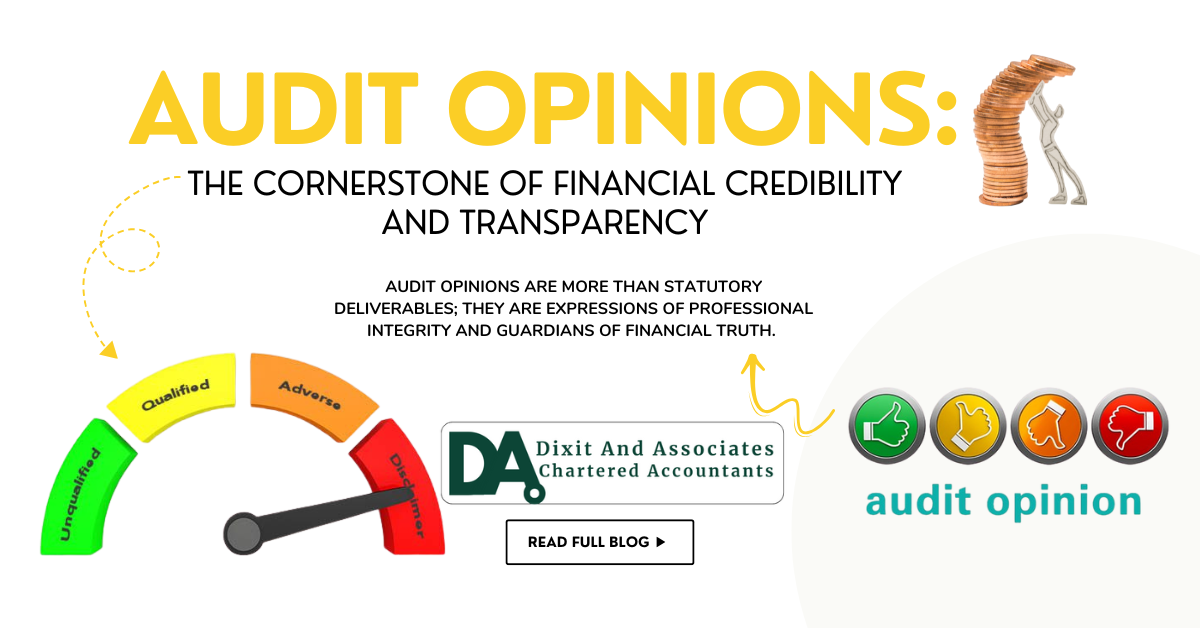
In a dynamic financial environment where stakeholders demand accountability and transparency, the auditor’s opinion serves as the ultimate seal of credibility. It communicates whether an entity’s financial statements present a true and fair view, in accordance with the Nepal Financial Reporting Standards (NFRS) and the Nepal Standards on Auditing (NSA) which are harmonized with the International Standards on Auditing (ISA). An audit opinion is not merely a formality; it is an independent professional judgment that influences investment decisions, regulatory trust, and public confidence.
The Four Types of Audit Opinions
Auditors express one of four opinions based on the nature, materiality, and pervasiveness of misstatements or limitations encountered during the audit process:
Unmodified (Clean) Opinion
Qualified Opinion
Adverse Opinion
Disclaimer of Opinion
Each opinion carries a distinct professional implication and requires precise articulation backed by evidence and judgment.
1. Unmodified (Clean) Opinion: An unmodified opinion signifies that the auditor has obtained sufficient and appropriate evidence to conclude that the financial statements are free from material misstatement, whether due to fraud or error.
Implications
Financial statements comply with NFRS and statutory requirements.
Adequate disclosures and consistent accounting policies have been applied.
Stakeholders can rely on the financial information with a high degree of confidence.
Illustrative Case
A company maintains comprehensive records, transparent disclosures, and effective internal controls. The audit reveals no material misstatement. → Opinion:Unmodified (Clean)
Professional Observation
An unmodified opinion reflects sound governance, disciplined accounting practices, and management integrity — reinforcing investor trust and institutional reputation.
2. Qualified Opinion: A qualified opinion is expressed when the auditor concludes that a material misstatement exists in the financial statements or that audit scope was limited in a specific area but the effect is not pervasive to the financial statements as a whole. The report typically includes the phrase “except for the matter described…”.
Common Triggers
Non-verification of inventory or fixed assets.
Non-disclosure of related party transactions.
Incomplete confirmations of receivables or payables.
Illustrative Case
A trading company was unable to perform physical verification of its inventory due to logistical constraints. All other records and disclosures were satisfactory. → Opinion:Qualified due to limitation in scope.
Professional Observation
A qualified opinion denotes isolated compliance deficiencies that management can address through corrective measures. It reflects transparency and accountability rather than systemic failure.
3. Adverse Opinion: An adverse opinion is issued when the auditor determines that misstatements are both material and pervasive, resulting in financial statements that do not present a true and fair view.
Common Triggers
Recognition of fictitious revenue.
Omission of material liabilities or contingent exposures.
Fundamental departures from NFRS in multiple areas.
Illustrative Case
A construction company records incomplete projects as revenue and conceals payables to subcontractors. Such treatment materially distorts profitability and the financial position. → Opinion:Adverse.
Professional Observation
An adverse opinion signifies a serious breakdown in financial integrity and governance, warranting regulatory scrutiny and immediate corrective action by management and the board.
4. Disclaimer of Opinion: A disclaimer of opinion is issued when auditors are unable to obtain sufficient appropriate audit evidence, and the potential effects of undetected misstatements could be both material and pervasive. In such cases, the auditor does not express an opinion.
Common Triggers
Management denies access to accounting records or explanations.
Loss or destruction of key documentation.
Unresolved uncertainty regarding going concern or litigation.
Illustrative Case
A cooperative society fails to maintain proper books of account and restricts auditor access to supporting documentation. → Opinion:Disclaimer of opinion.
Professional Observation
A disclaimer reflects severe information deficiency and an absence of audit assurance. It signals governance failure and often attracts attention from regulators and financing institutions.
Detailed Matrix of Situations and Audit Opinions
Sr. No.
Situation / Case
Nature of Issue
Auditor’s Assessment
Type of Opinion
1
Financial statements fully compliant with NFRS.
No misstatement.
Reliable financials.
Unmodified
2
Consistent accounting policies and adequate disclosure.
No issue.
Transparent reporting.
Unmodified
3
Stock verification not possible due to lockdown.
Scope limitation (specific).
Material, not pervasive.
Qualified
4
Omission of related party disclosure.
Disclosure deficiency.
Material, isolated.
Qualified
5
Deferred tax not recognized.
Accounting departure.
Material, limited impact.
Qualified
6
Fabricated revenue entries identified.
Intentional misstatement.
Material and pervasive.
Adverse
7
Hidden contingent liabilities.
Misleading presentation.
Material and pervasive.
Adverse
8
Records lost in fire, evidence missing.
Scope limitation (severe).
Evidence unobtainable.
Disclaimer
9
Auditor denied access to branch office.
Management restriction.
Pervasive limitation.
Disclaimer
10
Subsidiary excluded from consolidation.
Misstatement (group).
Material and pervasive.
Adverse
11
Pending lawsuit not disclosed.
Contingent omission.
Material and pervasive.
Adverse
12
Accounting policy change undisclosed.
Disclosure lapse.
Material, isolated.
Qualified
13
Understated tax provision.
Misstatement of liability.
Material and pervasive.
Adverse
14
Bank confirmations unavailable.
Evidence gap.
Material, not pervasive.
Qualified
15
Group audit report missing.
Scope limitation.
Pervasive.
Disclaimer
16
Ledger access denied by management.
Evidence restriction.
Pervasive limitation.
Disclaimer
17
Parallel accounting systems maintained.
Integrity issue.
Misstatement pervasive.
Adverse
18
Adoption of cash basis without disclosure.
Fundamental departure.
Misstatement pervasive.
Adverse
19
Early revenue recognition.
Overstatement.
Misstatement pervasive.
Adverse
20
Going concern uncertainty unaddressed.
Pervasive uncertainty.
Evidence inconclusive.
Disclaimer
21
Old receivables unprovided.
Asset overstatement.
Material, isolated.
Qualified
22
Capitalized non-capital expenses.
Misclassification.
Pervasive misstatement.
Adverse
23
Incomplete fixed asset register.
Limited scope.
Material, not pervasive.
Qualified
24
Vouchers missing for cooperative audit.
Evidence limitation.
Pervasive.
Disclaimer
25
Change in useful life unjustified.
Estimation issue.
Material, isolated.
Qualified
26
Import documentation missing.
Evidence unavailable.
Material, isolated.
Qualified
27
Expense deferral to inflate profits.
Manipulative reporting.
Pervasive misstatement.
Adverse
28
Intercompany balances unreconciled.
Control weakness.
Material, not pervasive.
Qualified
29
Fraud investigation obstructing audit.
Scope limitation.
Pervasive.
Disclaimer
30
Foreign exchange misstatement.
Error in valuation.
Material, limited.
Qualified
31
Management override of controls.
Integrity issue.
Misstatement pervasive.
Adverse
32
Incomplete branch accounts.
Scope limitation.
Pervasive.
Disclaimer
33
Data loss during system migration.
Evidence unavailable.
Pervasive limitation.
Disclaimer
34
Non-compliance with lease standard (NFRS 16).
Specific misstatement.
Material, limited.
Qualified
35
Government grant disclosure omitted.
Non-compliance (NFRS 20).
Material, isolated.
Qualified
36
Overstated fixed assets to enhance net worth.
Misstatement pervasive.
Adverse.
Adverse
37
Incomplete joint venture consolidation.
Group misstatement.
Pervasive.
Adverse
38
Records seized by authorities.
Severe limitation.
Pervasive.
Disclaimer
39
Minor rounding errors.
Immaterial.
No effect.
Unmodified
40
Full compliance and transparency.
No issue.
Reliable presentation.
Unmodified
Comparative Summary of Audit Opinions
Type of Opinion
Basis of Opinion
Severity of Misstatement
Level of Reliability
Unmodified
Compliance with NFRS and NSA.
None.
High.
Qualified
Material but not pervasive misstatement.
Moderate.
Reasonable.
Adverse
Material and pervasive misstatement.
High.
Low.
Disclaimer
Insufficient audit evidence.
Potentially high.
None.
Final words
Audit opinions are more than statutory deliverables; they are expressions of professional integrity and guardians of financial truth. A clean opinion builds confidence and trust, while a modified opinion identifies areas that demand improvement and governance attention.
CA. Tej Prakash Dixit Dixit and Associates Chartered Accountants
As artificial intelligence (AI), automation, and robotics redefine how the world works, developing economies like Nepal are standing at a historic crossroads. The challenge is no longer about whether change is coming — it’s already here — but how countries like Nepal can position themselves to thrive in an AI-driven world. For a rising economic hub like Nepalgunj, this shift presents both risks and an opportunity to leap ahead.
The Global Disruption: AI Is Rewriting the Job Market
Globally, we are witnessing a rapid transformation in employment due to technological advancements. According to the World Economic Forum (WEF), by 2025, 85 million jobs will be displaced, but 97 million new roles will emerge. The caveat? These new roles demand entirely new skills: digital fluency, critical thinking, and adaptability.
In the corporate world, the impact is already visible. Between 2022 and 2024, companies like Amazon, Google, Meta, and Microsoft laid off over 150,000 employees, many in white-collar roles such as finance, software engineering, HR, and customer support. In the first half of 2025 alone, over 62,000 tech jobs were eliminated — driven largely by AI adoption in content creation, coding, and virtual support services.
India’s Automation Shock: Middle-Class Jobs at Risk
India, a leader in IT and outsourcing, is facing significant challenges. With over 650,000 white-collar jobs lost in its tech sector since 2023, companies are aggressively using robotic process automation (RPA) and generative AI tools to cut costs.
Industry leaders warn that 40–50% of white-collar jobs — especially those involving routine tasks — could disappear over the next few years. The Indian experience offers a crucial warning to Nepal: service economies must modernize or risk rapid displacement.
Nepal’s Fragile Job Market: Unprepared for the Machine Age
Nepal’s economy is heavily service-oriented (≈58% of GDP), with a large informal sector and rising youth unemployment. Each year, 400,000+ Nepali youth leave the country for employment — largely in unskilled or semi-skilled roles abroad.
At home, unemployment is estimated at 10.7%, with over 80% of jobs being informal. In growing cities like Nepalgunj, employment is centered on small retail, teaching, clerical government roles, and hospitality — sectors now facing quiet disruption from automation.
For instance, banking institutions are adopting AI-driven credit scoring and chatbots. Schools are moving toward online learning. Local retailers are digitizing inventory and sales tracking. These shifts are slowly making redundant the clerical and administrative roles that once formed the backbone of regional employment.
White-Collar Disruption: A Global Service Sector Shift
Worldwide, AI is transforming the service sector. In banking, up to 54% of roles are considered automatable. While this can raise profits (projected gains of $170 billion globally), it also threatens thousands of mid-level jobs in finance, insurance, and administration.
In Nepal, this reality is fast approaching. Manual accounting is being replaced by ERP software. Customer queries are increasingly managed through bots. Education consultancies are using automated CRM tools to process applications. In regions like Nepalgunj, such trends will deepen unless the workforce upskills.
AI in Governance: What Nepal Can Learn from India
One of the most powerful applications of AI is in public governance. India’s CPC Bangalore processes over 70 million tax returns annually using AI and machine learning, allowing for real-time fraud detection, audit targeting, and refund processing.
Nepal’s government can follow this model. AI-based automation in taxation, land records, licensing, procurement, and social security could:
Cut corruption
Reduce delays
Improve transparency
Increase revenue
For a city like Nepalgunj, municipal-level automation — such as online billing, tax filing, or digital grievance systems — could make local governance significantly more responsive and accountable.
What Businesses Can Do to Adapt
In Nepal, especially outside Kathmandu, most small businesses and service providers still operate manually. But survival in an AI-driven economy will demand change. Here’s how businesses can begin:
Train staff: Upskill employees in basic IT, communication, and digital tools.
Hybrid models: Use both digital and in-person channels (e.g., coaching centers using Zoom + classroom).
Use data: Make decisions based on sales trends, customer feedback, and usage analytics.
Partner with startups: Work with local IT firms or developers to implement affordable AI solutions.
In Nepalgunj, digital service centers and innovation hubs could play a key role in helping local businesses transition smoothly.
Education: The Weakest Link in Nepal’s AI Readiness
Nepal’s education system is still stuck in rote learning and outdated syllabi. While countries are embedding AI, robotics, and coding in schools, Nepal is exporting its youth — over 60,000 students per year — who often never return due to a lack of skilled jobs at home.
To reverse this, the education sector must transform:
Introduce STEM and AI curricula by secondary school
Launch vocational programs in AI, IT, and automation
Set up digital innovation labs in public colleges
Train teachers in EdTech and digital pedagogy
Encourage industry–academia collaboration for internships
Nepalgunj’s schools and colleges can lead the way by piloting skill-focused, tech-enabled learning ecosystems.
Government’s Role: From Passive Observer to Strategic Enabler
Nepal’s policymakers must recognize that automation is not a future issue — it is a current challenge that demands strategic foresight. Here’s what the government can do:
National AI Policy: Define ethical standards, sectoral applications, and labor protections.
Invest in infrastructure: Ensure internet, electricity, and devices reach underserved areas.
Partner for reskilling: Launch skilling and reskilling programs with private-sector collaboration.
Expand smart services: Automate tax, social security, business registration, and civil services.
Support local innovation: Offer grants or tax benefits to startups building AI tools in Nepali for education, health, agriculture, or governance.
A Final Word: The Time to Act Is Now
The age of automation is here. It is displacing jobs, reshaping business models, and redefining governance — not just in Silicon Valley, but in Kathmandu and Nepalgunj alike.
The question is not whether Nepal will be affected, but whether it will be prepared.
For business leaders, this means investing in technology and people.
For educators, this means teaching real-world, future-ready skills.
For policymakers, this means thinking long-term, acting urgently.
If Nepal acts now — with intent, strategy, and speed — it can turn AI into a tool for national transformation. If it delays, the cost may be too high to reverse.
Author’s Note: This article draws on global reports from the World Economic Forum, IMF, World Bank, as well as India’s CPC Bangalore case, and Nepal’s employment and education statistics. The insights aim to foster informed decisions for policymakers, businesses, and institutions.
नेपालगन्जमा बस्ने एउटा युवाले आफ्नो सपना साकार पार्न चाहन्छ—चाहे त्यो प्रविधिमा आधारित नयाँ स्टार्टअप होस्, आधुनिक शैलीको कृषि होस्, वा क्रिएटिभ सोच लिएर सुरु गर्न लागिएको एउटा आकर्षक क्याफे। तर समस्या एउटै छ—पुँजी छैन, र कुनै जग्गा-जमिन, घर वा धितो राख्ने सम्पत्ति पनि छैन।
यस्ता सपना बोकेका धेरै युवाहरूका लागि अब आशाको किरण देखिएको छ।
नेपाल राष्ट्र बैंकले एक नयाँ वित्तीय ढाँचा ल्याउने तयारी गरिरहेको छ, जसमा अब ऋणको पहुँच सम्पत्तिमा होइन, व्यक्तिको आर्थिक व्यवहारमा आधारित हुनेछ।
अब बैंकहरूले कसैलाई ऋण दिनु अघि उसले अघिल्लो समय पैसाको व्यवस्थापन कसरी गर्यो भन्ने कुरा हेर्नेछन्—जस्तै बैंक खाताको प्रयोगशैली, मोबाइलमार्फत गरिएको कारोबार, नियमित बचत, र अघिल्ला कर्जाहरू समयमै तिरेको व्यवहार।
हाल यसको लागि आवश्यक कानुनी र प्राविधिक संरचना तयार हुँदैछ, र यसमा अन्तर्राष्ट्रिय अभ्यासहरूलाई पनि अध्ययन गरिएको छ।
यदि यो योजना सफलतापूर्वक लागू भयो भने, जसले आर्थिक अनुशासन कायम गर्न सकेको छ उसले अब बैंकबाट सहयोग पाउनेछ—सम्पत्ति नभए पनि, सपना साकार पार्ने बाटो खुल्नेछ।
नेपालमा युवाहरूको उद्यमशीलता र नयाँ सोचलाई उचाइमा लैजान यस्तो नीति एक महत्वपूर्ण मोड बन्न सक्छ।